FlowOps was not built from theory. It was built from observation.
One family member works as an Accounting Manager in a regional beverage distribution company. Over time when it came about work, I began hearing about recurring operational friction, drivers reporting deliveries verbally, warehouse confirmations happening over phone calls, status updates shared through WhatsApp, and performance reconciled through conversations rather than data.
After every route, outcomes had to be announced. If a delivery failed, someone explained it. If a client was closed, someone mentioned it. If an order was partially delivered, it was clarified later. There was no structured system recording transitions at the moment they happened.
Instead of Record → Persist → Query → Report, the workflow was Say → Forward → Ask → Confirm → Repeat. FlowOps was built to replace announcement-based operations with deterministic state transitions.
The Problem
Mid-sized distribution companies operate across multiple zones with sales agents, warehouse operators, drivers, and managers working in parallel. Without a structured system, coordination depends on communication rather than controlled state logic.
This leads to weak traceability between orders and deliveries, inconsistent status interpretation, fragmented reporting, and no reliable audit trail.
The issue is not logistics complexity. It is state inconsistency.
Architecture
FlowOps is built on a strict hierarchical model:
Route → RouteStop → Order → OrderLine
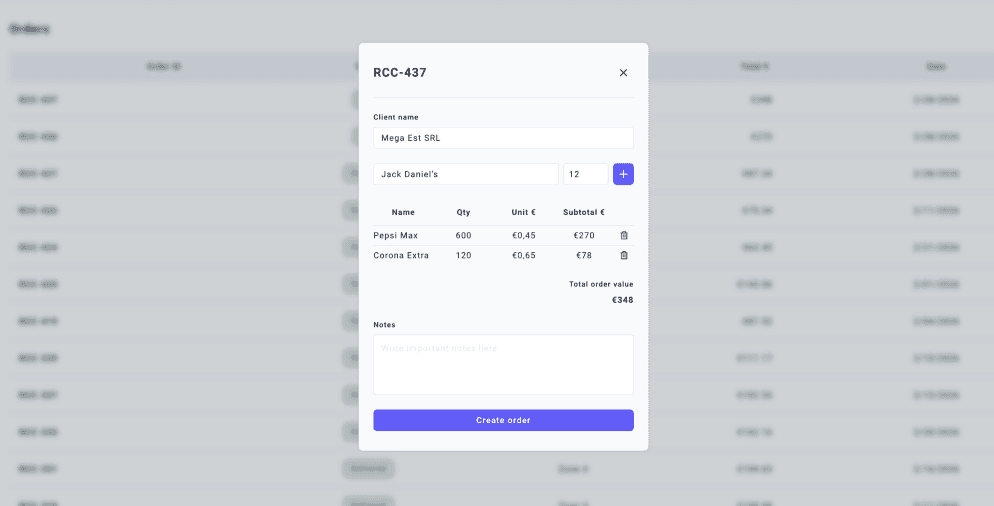
Each layer has a defined responsibility. OrderLines store immutable commercial detail. Orders represent transactions. RouteStops act as operational containers for drivers. Routes represent daily execution plans.
Drivers never modify Orders directly. They update RouteStops. Orders reflect outcomes but remain commercially isolated. This separation prevents cross-contamination between financial logic and delivery execution.
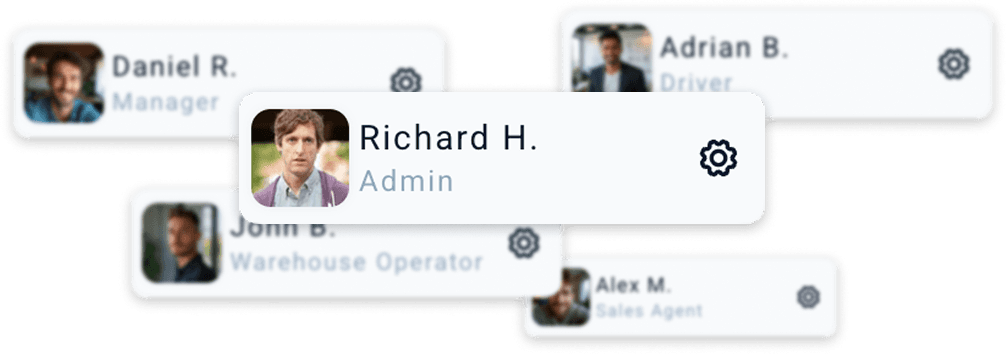
Role-based visibility is enforced at the database level, ensuring drivers see only their routes, sales agents see their zone, and managers maintain oversight without compromising data integrity.
Deterministic State Modeling
FlowOps operates as a state machine.
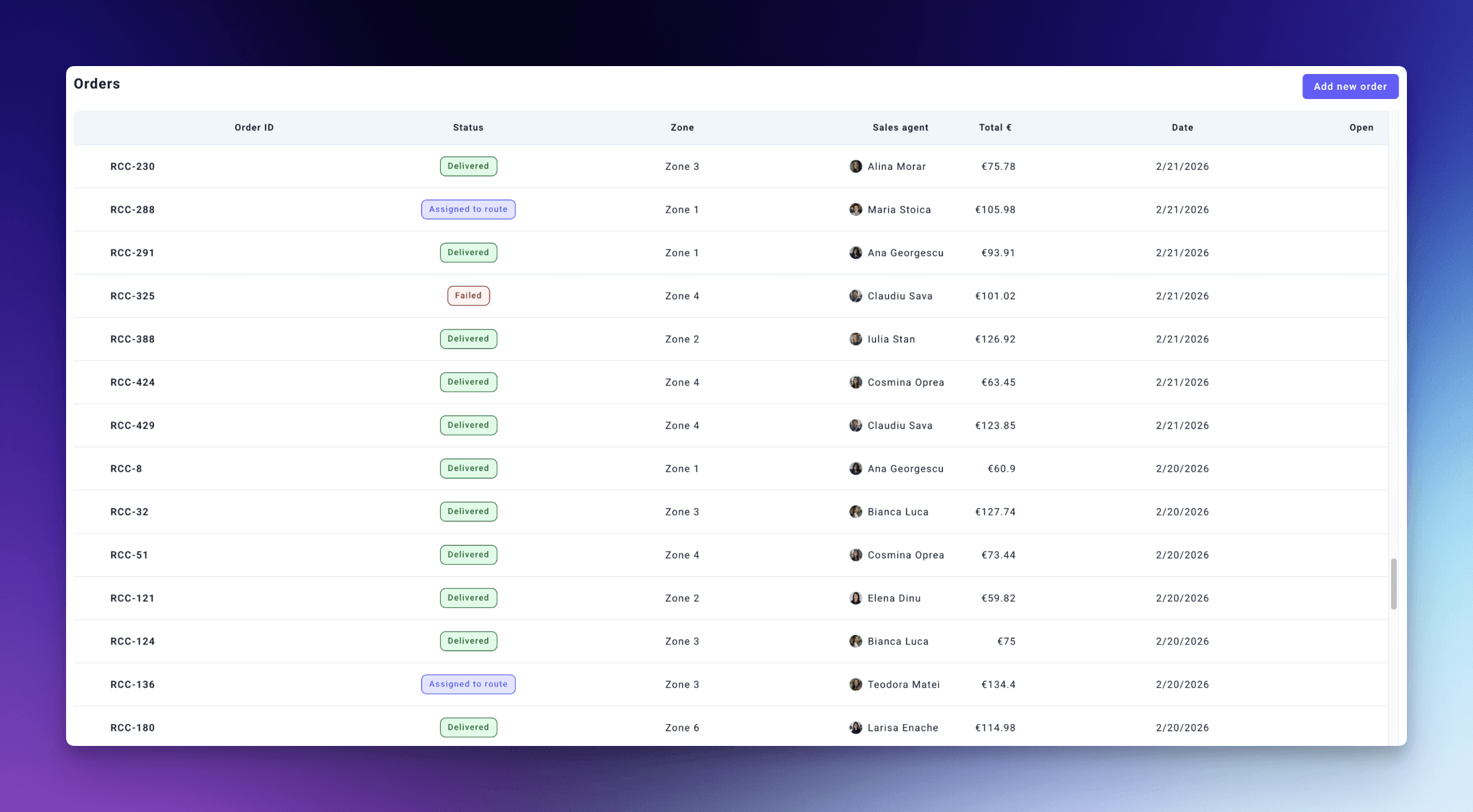
Orders move through Draft, Submitted, Approved, Prepared, Assigned to Route, and finally Delivered or Failed. Once assigned, status is derived from RouteStop outcomes rather than manual edits.
Route status is computed from its stops. A route with all delivered stops becomes Completed. Mixed outcomes result in Partially Failed. All pending stops remain Loaded. Zero stops remain Planned.
Statuses are not decorative labels. They are computed results.
This eliminates contradictory states and ensures reporting accuracy.
Performance Decisions
The system favors predictable behavior over dynamic complexity. Key aggregates such as total order value and route status are stored rather than recalculated on every page load. Option sets control fixed states to prevent invalid combinations. Reporting queries are optimized to avoid nested runtime searches.
The application was stress-tested with hundreds of orders, thousands of order lines, and dense multi-zone route distribution to validate performance and privacy rule behavior under realistic operational load.
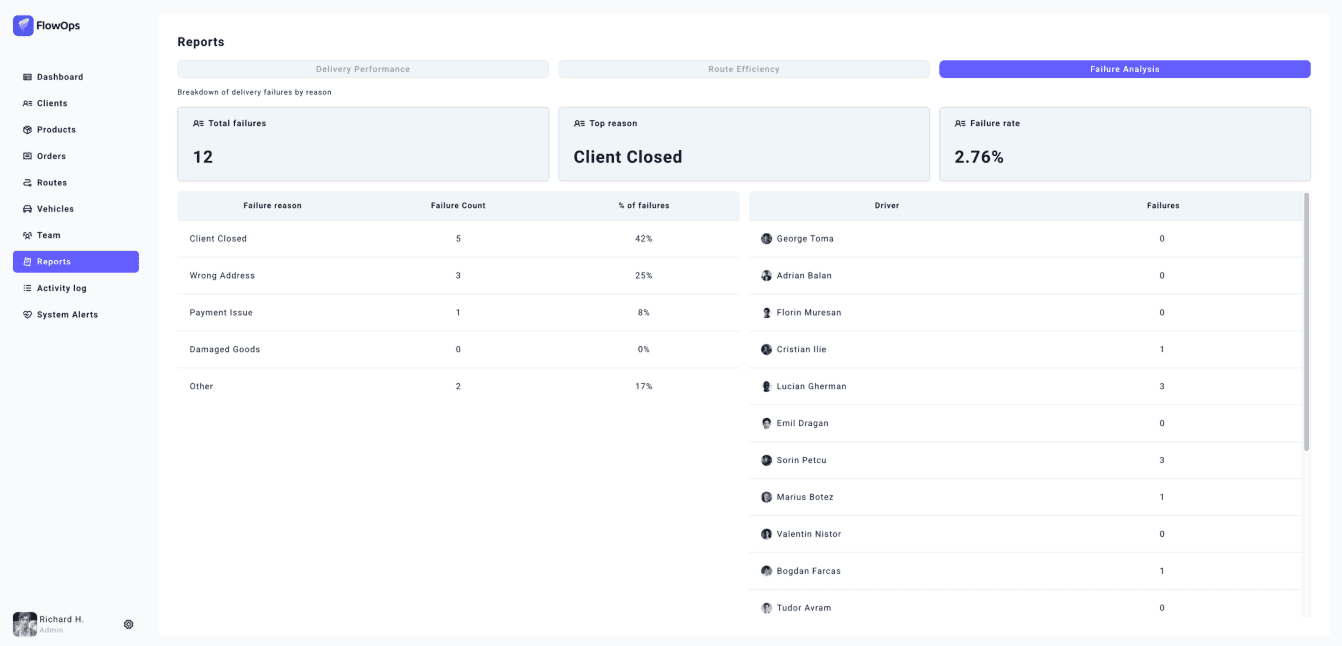
Audit & Accountability
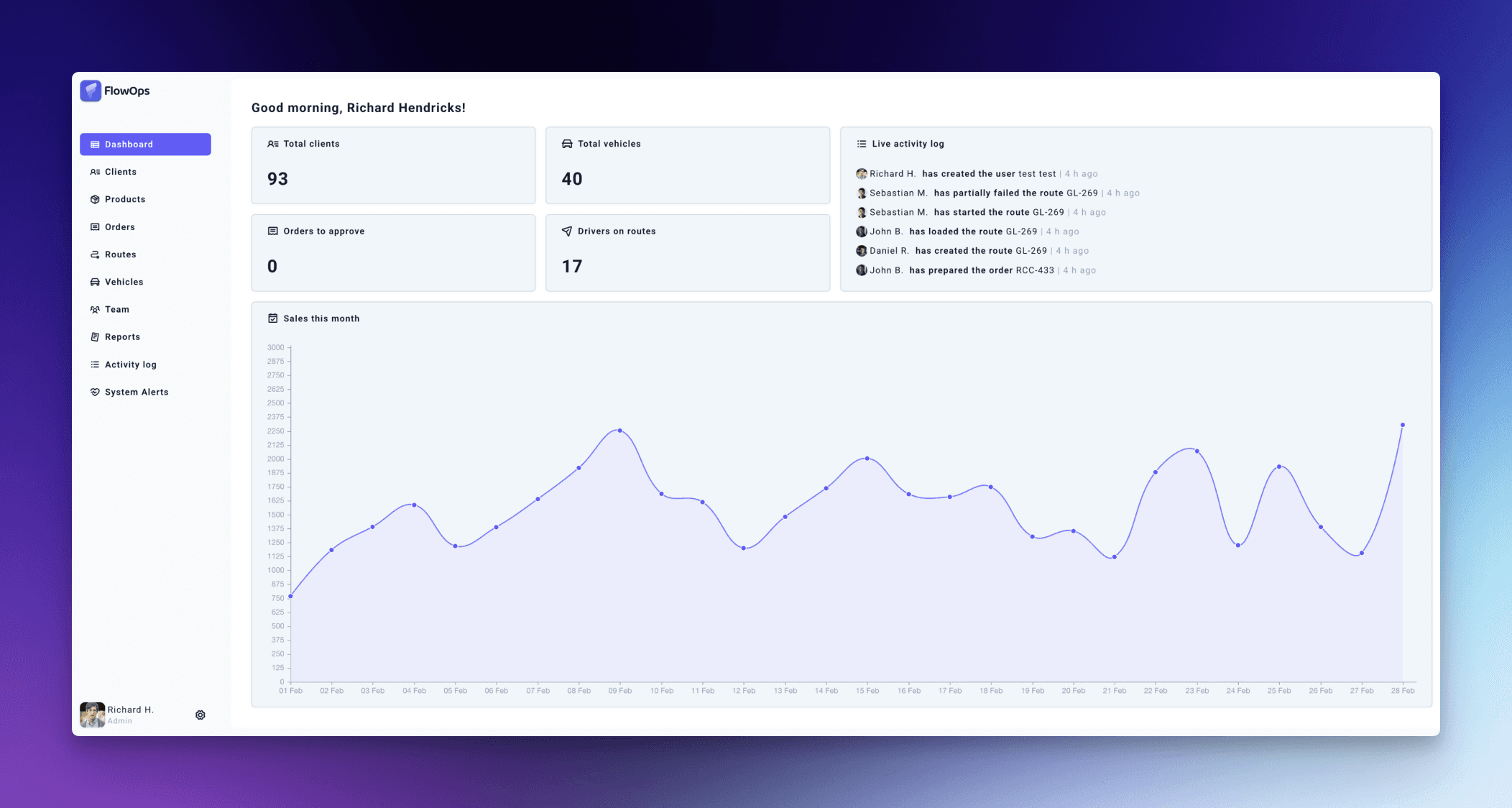
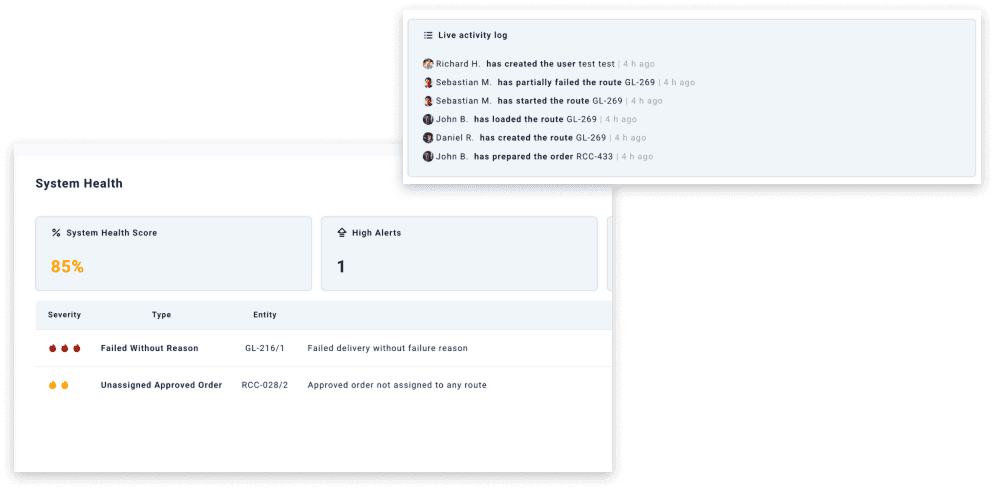
Every significant action generates a structured Activity Log entry capturing action type, entity, actor, and related objects.
Instead of relying on memory or messaging, the system provides traceable answers. Delivery confirmation becomes recorded fact, not social agreement.
Beyond logging actions, FlowOps includes a System Health layer. The system monitors operational anomalies such as stuck orders, inconsistent status transitions, or routes that remain in incomplete states. These checks act as integrity guards, ensuring that derived states remain aligned with underlying data.
This combination of event logging and anomaly detection transforms accountability from reactive to proactive.
The system does not only record actions, it validates them.
What FlowOps Represents
FlowOps demonstrates that operational chaos is rarely caused by complexity. It is caused by unrecorded transitions.
By enforcing structured state changes, isolating commercial and delivery logic, embedding auditability, and monitoring system integrity, FlowOps transforms fragmented communication into observable, queryable operational control.
It is not just a dashboard.
It is a deterministic operational system built from real-world friction.